Summary:
Someone told you your chimney needs to be rebuilt. Maybe it was a home inspector, maybe it was the sweep who came out last fall, or maybe you can see it yourself, with bricks that look soft and crumbly and mortar that has given up. Now you’re trying to figure out what you are dealing with: a minor fix or a major project.
That uncertainty is where most Twin Cities homeowners get stuck. This post is written to get you unstuck, explaining what a chimney rebuild involves, how to tell if you need a partial or full rebuild, what factors influence the investment in this market, and what to watch for when you’re comparing contractors.
Partial vs. Full Chimney Rebuild: The Difference
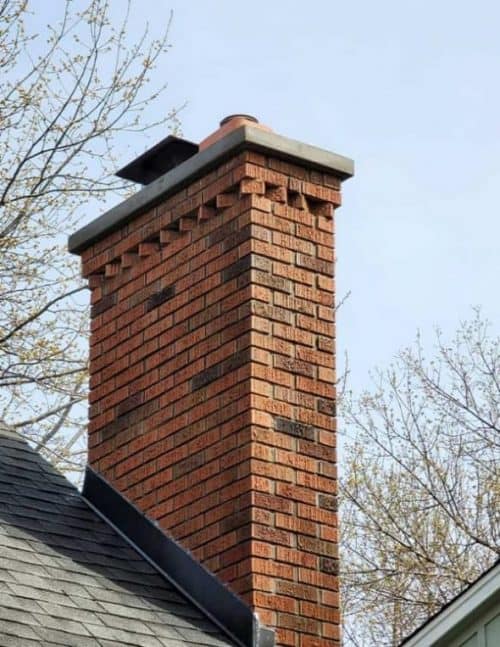
A chimney rebuild isn’t one thing; it is a spectrum. On one end, you have a partial rebuild, which typically means removing and replacing the section of chimney that sits above the roofline. That’s where most of the damage happens first, because it takes the full force of weather year-round with no shelter. On the other end, a full rebuild means taking the chimney down to its foundation and starting over.
Most homeowners across the Twin Cities end up somewhere in the middle, needing more than tuckpointing but less than a ground-up replacement. Understanding where your chimney falls on that spectrum is the first step to getting an estimate that makes sense.
How Do You Know If A Partial Rebuild Is Enough?
A partial rebuild makes sense when the damage is concentrated in the upper section of the chimney, the part you can see from the roof, and the structure below the roofline is sound. Spalling bricks, crumbling mortar joints, a deteriorating crown, or a chimney cap past its useful life are all signs that the top section needs to come down and be rebuilt with fresh materials. If the damage stops there, a partial rebuild is the right call.
In the Twin Cities, this is the most common rebuild scenario. Chimneys in Burnsville, Roseville, Edina, Lakeville, and similar suburbs are often from the 1950s through the 1970s, putting them in the 50-to-70-year range, which is old enough that the top section has taken a serious beating but not necessarily old enough to require a full replacement. The key is an honest inspection that tells you how far down the damage goes.
One thing worth knowing: a partial rebuild done right isn’t a shortcut. It still involves removing the deteriorated brickwork course by course, rebuilding with properly mixed mortar, constructing a new crown, and often replacing the cap and flashing. Done correctly, it should last decades. Done with the wrong materials, which is a risk if you hire a contractor who doesn’t specialize in chimneys, it can start failing within a few winters.
Minnesota’s climate is unforgiving in a way that homeowners from warmer states don’t always anticipate. The Twin Cities experiences somewhere between 40 and 60 freeze-thaw cycles every winter. Water gets into hairline cracks, freezes, expands, and widens those cracks a little more each time. A partial rebuild using mortar that isn’t specifically rated for freeze-thaw conditions will deteriorate faster than it should, leaving you back at square one sooner than expected. This is one of the reasons local expertise matters more here than in most other markets.
When Does A Chimney Need A Full Rebuild Instead?
A full chimney rebuild becomes the right answer when the damage isn’t limited to the top section. If the mortar failure or brick deterioration extends below the roofline, if there’s structural movement or visible lean in the chimney, if the foundation has settled, or if the chimney has been patched and repaired multiple times over the years without addressing the underlying problems, at some point you’re spending repair money on a structure that’s past the point of repair making financial sense.
A useful rule of thumb is that when the extent of what’s wrong indicates severe systemic failure, a full rebuild is the smarter long-term investment. You’re not throwing good money after bad, and you end up with a chimney built to current standards rather than a patchwork structure held together by successive rounds of spot repairs.
For homeowners in Saint Paul and Minneapolis, particularly in neighborhoods with homes from the early 1900s, full rebuilds are more common than in newer suburbs. Original brick chimneys from that era have been through a century of Minnesota winters. Some have been repointed multiple times. At a certain point, the cumulative deterioration is too extensive for anything short of a full rebuild to be a sound investment.
Full chimney rebuilds take longer, typically taking 5 to 14 days depending on chimney height, material, and complexity, compared to 2 to 4 days for a partial rebuild. They may also require scaffolding, which affects scheduling and project planning. These are involved structural projects that require specialized masonry crews.
What should concern you is when a contractor gives you an estimate that seems unusually low without a clear explanation for why. Chimney masonry is skilled work, and the materials required for a rebuild that holds up in Minnesota’s climate are substantial. An estimate that seems too good to be true usually means something is being left out, such as proper materials, the liner evaluation, or the crown and flashing work that should be part of any complete rebuild.
Chimney Rebuild Factors In The Twin Cities: What Drives The Project
Project scope variation is one of the most frustrating parts of planning a chimney rebuild. You call three contractors and get different recommendations that don’t seem to align. The reason isn’t that someone is dishonest; it’s that several factors genuinely change the scope and requirements of the work, and not every contractor accounts for them the same way.
Understanding what drives the project helps you evaluate proposals more confidently, ask better questions, and recognize when something important is missing from a low estimate.
What Is Included In A Comprehensive Chimney Rebuild Quote?
The biggest source of proposal variation is scope, specifically what each contractor is including and what they’re leaving out. A chimney rebuild quote should account for the extent of brick and mortar removal, the height of the chimney (which affects labor time and scaffolding needs), the type of brick and mortar specified, crown construction, cap replacement, and flashing. If a liner evaluation or replacement is needed, that’s a separate but related requirement that a thorough contractor will flag upfront.
When you’re comparing proposals, the question is not just what the bottom line looks like, but what this includes. A written, itemized estimate tells you far more than a verbal number. If a contractor can’t or won’t give you a written scope of work, that’s worth paying attention to.
In Dakota County, Washington County, and the outer-ring suburbs of Scott County, chimney heights tend to vary more than in the denser urban neighborhoods of Minneapolis and Saint Paul, as larger lots, taller homes, and steeper roof pitches all factor into the labor calculation. A chimney on a two-story home in Woodbury or Lakeville may require different scaffolding considerations than one on a rambler in Roseville or Edina. These are real structural variables, and a contractor with experience across the metro will account for them accurately.
The other factor specific to this market is materials. Minnesota’s freeze-thaw cycle demands mortar rated for those conditions, and Type S mortar is the standard for above-roofline chimney work because of its strength and durability under repeated thermal stress. Using a softer mortar mix to save on materials is a false economy that shows up as premature failure within a few winters. When talking to contractors, it’s a reasonable question to ask what mortar mix they’re specifying and why.
What Happens If You Wait On A Chimney Rebuild In Minnesota?
Chimney deterioration isn’t static. A chimney that needs a partial rebuild today doesn’t stay a partial rebuild candidate if you give it another winter or two. Each freeze-thaw cycle works on existing cracks and voids, widening them, letting in more water, and expanding the damage downward. What’s above the roofline today can become a structural issue below it after another season of Minnesota weather does its work.
The practical implication is that delaying a rebuild isn’t neutral. It’s a decision that often converts a manageable partial rebuild into something significantly more extensive and disruptive down the road.
There’s also a scheduling reality specific to the Twin Cities market. Masonry mortar shouldn’t be applied below 40°F without cold-weather precautions, meaning the viable window for chimney rebuild work runs roughly from late spring through early fall. August through October is the sweet spot, being warm enough for proper mortar cure and timed so the work is complete before you need the fireplace. Contractors who are good at this work get booked up during that window. Homeowners who wait until October to start calling often find themselves scheduling into the following spring, meaning another winter on a compromised chimney.
If you’ve already had an inspection flagging rebuild-level deterioration, the most proactive thing you can do is get on a contractor’s schedule in the late summer or early fall, prior to the heating season rush. This timing is especially important across Hennepin, Ramsey, Dakota, Scott, and Washington Counties, where the heating season is long and demand for masonry work peaks quickly.
Ready To Get A Straight Answer On Your Twin Cities Chimney?
If you’re trying to figure out if your chimney needs a partial rebuild, a full rebuild, or something else entirely, the most useful thing you can do is get an inspection from someone who will give you an honest answer and put it in writing. Not a verbal ballpark, not a pressure-driven sales visit, but a clear assessment of what’s there, what needs to happen, and what the project involves.
Call Suburban Chimney Solutions today to schedule your inspection before the fall booking window fills up!