Summary:
Most homeowners searching for chimney sweep services are not looking for a lecture on fire safety. They already know it matters. What they want to know is what the service entails, what they are getting, and how to know if they are being quoted fairly.
Those are reasonable questions, and the chimney industry does not always make them easy to answer. Service scopes vary, terminology gets used interchangeably, and it is hard to tell if two quotes are even for the same scope of work.
Here is a straight answer covering what a professional chimney sweep and inspection includes, what factors influence the service across the Twin Cities metro, and what variables can move the project scope up or down.
What Does A Chimney Sweep Entail In The Twin Cities, MN?
In the Twin Cities metro, covering Hennepin, Ramsey, Dakota, Washington, and Scott Counties, a standard chimney sweep covers most residential homes. That service reflects real variables: chimney height, level of creosote buildup, the time since the flue was last swept, and the time it takes to do the job correctly.
That service should include more than just brushing the flue. A thorough sweep covers the full system, including the firebox, smoke chamber, and interior flue, along with a visual inspection of what the technician can access. If you are getting a quote that seems unusually low, it is worth asking what exactly is and isn’t included before you book.
What's The Difference Between A Chimney Sweep And A Chimney Inspection?
This is one of the most common points of confusion, and it is worth clearing up before you book anything.
A chimney sweep is the cleaning side of the service. The technician removes creosote, soot, and any debris from the firebox, smoke chamber, and flue. Creosote is the byproduct of burning wood, accumulating on the interior walls of your chimney over time, and in its more advanced stages it becomes a direct fire hazard. Removing it is the primary point of the cleaning.
A chimney inspection is the evaluation side. The technician looks at the structural condition of the system, including the liner, the crown, the mortar joints, the flashing, and the cap, to identify anything needing attention. A Level 1 inspection is a visual assessment of accessible areas. A Level 2 inspection goes further, using a video camera to scan the interior of the flue liner. That is the level required when you are buying or selling a home, after a chimney fire, or when you are switching fuel types.
Here is the important part: a good chimney sweep should include both. Cleaning without inspecting means you have removed the creosote but have no idea if the liner is cracked, the crown is deteriorating, or water has been getting in. In the Twin Cities, where freeze-thaw cycling puts real stress on masonry every single winter, that inspection component is not optional, as it is the whole reason you are paying for a professional instead of doing it yourself.
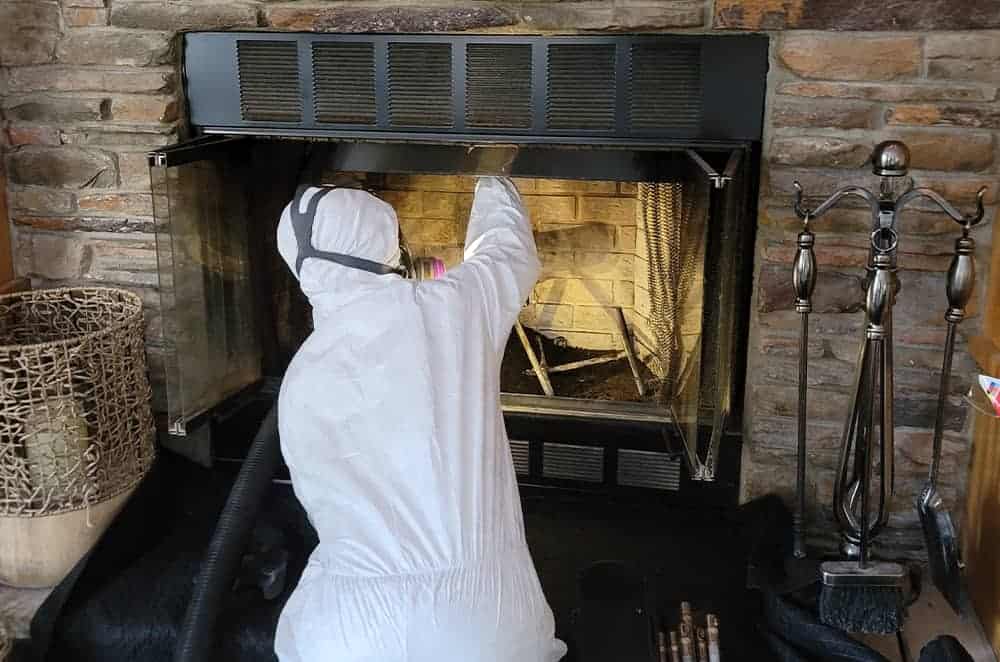
When you book a sweep with us, the inspection is part of the service, not an add-on. We use HEPA-filtered vacuum systems to contain soot and keep your home clean, and we include a video scan of the interior liner to check for gaps, cracks, and missing mortar joints that are not visible to the naked eye. You will know what we found, and we will tell you plainly what is urgent, what can wait, and what looks fine.
How Often Should You Schedule A Chimney Sweep In Minnesota?
The NFPA recommends annual chimney cleanings and inspections for all actively used fireplaces. That is the industry standard, and it is a reasonable baseline for most Twin Cities homeowners.
However, actively used is where people sometimes talk themselves out of it. If you only burned a handful of fires last winter, you might assume you can skip a year. That logic makes sense on paper, but it misses the inspection side of the equation. Even a chimney that hasn’t been used much can develop problems, such as animals nesting in uncapped flues, moisture getting in through cracked crowns, and mortar deteriorating from freeze-thaw cycling regardless of whether you are lighting fires.
The Twin Cities climate is hard on masonry. Minneapolis and St. Paul regularly see temperatures swing from below zero in January to above 90 in July, representing a temperature range of more than 100 degrees within a single year. That thermal stress, combined with dozens of freeze-thaw cycles within a single winter, causes water to infiltrate porous brick and mortar, freeze, expand, and fracture the material from the inside. It is not dramatic or sudden; it is slow, cumulative, and invisible until it causes a failure.
This is why the annual sweep matters more in this market than it might in a warmer climate. A chimney that looks fine from the outside in October can have mortar damage that has been worsening for years. Catching it early, when a maintenance repair requires minor effort, is a very different situation than catching it after years of water infiltration, when you are looking at an extensive crown rebuild or a full roofline-up rebuild.
We serve homeowners across all five counties, ranging from older South Minneapolis and St. Paul neighborhoods where chimneys are pushing 80 to 100 years old, to newer construction in Woodbury, Shakopee, and Prior Lake with factory-built systems having their own maintenance requirements. The age and type of your chimney affects what we look for, but the annual inspection standard applies across the board.
How To Know If You're Getting A Fair Chimney Sweep Quote
The chimney industry has a reputation problem, and it is earned. Bait-and-switch pricing, meaning a low initial quote followed by a large upsell during the appointment, is a real pattern showing up in consumer complaints and online reviews. Knowing what a fair scope of service looks like is the best protection against it.
A legitimate chimney sweep in the Twin Cities metro covers a comprehensive standard job. A quote coming in at an unusually low figure should raise a question regarding what is included and what the technician will say once they are in your home.
What Should Be Included In A Professional Chimney Sweep Appointment?
A thorough chimney sweep appointment covers more ground than most homeowners expect. Here is what a complete service should look like from start to finish.
Before we touch anything inside, our technician does an exterior assessment, looking at the cap, crown, flashing, and visible masonry for obvious damage. This takes a few minutes and often surfaces issues that the interior inspection will then confirm or rule out.
Inside, we set up drop cloths around the hearth and connect a HEPA-filtered vacuum to the fireplace opening before any brushing begins. This matters because fine soot particles are small enough to recirculate through a standard vacuum and spread through your home’s air. HEPA filtration keeps that from happening. If a company does not mention their vacuum setup, it is a reasonable question to ask.
The cleaning itself covers the firebox, the smoke chamber above it, and the full length of the flue. Depending on the level of creosote buildup, this can take anywhere from 20 minutes to over an hour. Stage 1 creosote, the light and flaky kind, brushes away relatively easily. Stage 2 buildup is tar-like and harder to remove. Stage 3, the glazed kind, is the most dangerous and requires chemical treatment before mechanical removal. A good technician will tell you which stage they are dealing with and what that means for the cleaning process.
After the cleaning, the interior liner inspection, ideally with a video camera, should confirm whether the liner is intact, whether mortar joints are missing, and whether there are any cracks or gaps that could allow combustion gases to escape into the home. This is the part most directly affecting safety, and it distinguishes a real inspection from a quick visual pass.
At the end of the appointment, you should receive a clear explanation of what was found, including what is in good condition, what needs attention, and what is urgent versus what can be monitored. No pressure or worst-case scenarios designed to frighten you into same-day repairs, just an honest read of what the chimney looks like and what, if anything, it needs.
What Factors Can Affect The Scope Of A Chimney Sweep In The Twin Cities?
A standard service covers most residential jobs, but a few factors can influence the required scope of work.
Chimney height and accessibility are the most common variables. A single-story home with a short, easy-to-access chimney takes less time than a two-and-a-half-story home featuring a tall, steep-pitch chimney requiring more equipment and care to work safely.
The level of creosote buildup matters too. A chimney swept annually with light Stage 1 accumulation is a straightforward job. One that has not been swept in several years, or one where green or unseasoned wood was burned regularly, may have significant Stage 2 or Stage 3 buildup requiring more time and, in some cases, chemical treatment before mechanical cleaning can happen. That additional work is legitimate and worth addressing, but it should be explained and quoted clearly before work begins, rather than announced mid-appointment.
The type of system also plays a role. Traditional masonry chimneys, common in older Hennepin and Ramsey County neighborhoods, are cleaned differently than factory-built prefabricated systems more common in newer Dakota, Washington, and Scott County construction. Both fall well within the scope of a professional sweep, but the approach and equipment differ.
If a Level 2 inspection is needed because you are buying or selling a home, because there has been a chimney fire, or because you are changing from wood to gas, that is a more involved service than a standard Level 1 visual inspection and will be evaluated accordingly. The video scan equipment, additional time, and documentation involved represent real operational needs. A company including Level 2 inspection capability in their standard sweep service provides more comprehensive value, while one evaluating it separately should explain what that additional service covers.
What you should never see is a project scope changing dramatically once the technician is inside your home without a clear, documented reason. Written estimates, transparent findings, and honest recommendations form the baseline for a company worth hiring.
Ready To Schedule A Chimney Sweep In The Twin Cities, MN?
A chimney sweep in the Twin Cities covers essential maintenance for most homes, and that service should include a thorough cleaning, a full inspection, and a straight answer regarding what your chimney needs. No sales pitches or lists of urgent repairs designed to alarm you, just an honest assessment from someone who knows what they are looking at.
The Twin Cities climate is hard on chimneys. Annual service is not just a recommendation; in this market, it is the most effective thing you can do to stay ahead of the repairs that freeze-thaw cycling eventually forces.
If you are in Hennepin, Ramsey, Dakota, Washington, or Scott County and you are ready to get it scheduled, Suburban Chimney Solutions is a locally owned, owner-operated team serving the full metro. Reach out for an estimate and we will give you a clear picture of where things stand with no pressure or surprises.
Call Suburban Chimney Solutions today to schedule your annual chimney sweep and inspection!