
Summary:
Most homeowners don’t think about their fireplace until something goes wrong. A leak near the chimney, smoke backing into the room, a cap that’s been sitting crooked since last winter — suddenly you’re Googling repair costs at 10pm and wondering if you’re about to get talked into a $6,000 job you don’t actually need.
Here’s the honest answer: most fireplace problems don’t require full replacement. But some do, and knowing the difference saves you real money. We’ve put together this guide to help Ramsey County homeowners make that call with clear eyes — before anyone shows up with a quote.
Fireplace Repair vs. Replacement: How to Make the Right Call
The general rule of thumb in the chimney industry is this: if repair costs are approaching 50 to 60 percent of what a full replacement would run, replacement starts to make financial sense. In practice, that threshold is rarely reached for masonry chimneys. A full chimney rebuild can cost $10,000 to $15,000 or more. Most targeted repairs — liner work, crown patching, flashing replacement — fall well below $3,000.
What drives people toward unnecessary replacements is usually incomplete information. A company quotes a liner replacement without explaining that the rest of the system is solid. Or a homeowner sees a crack and assumes the worst. The smarter move is a thorough inspection first, so you know exactly what you’re dealing with before any decision gets made.
What a Proper Chimney Inspection Actually Tells You
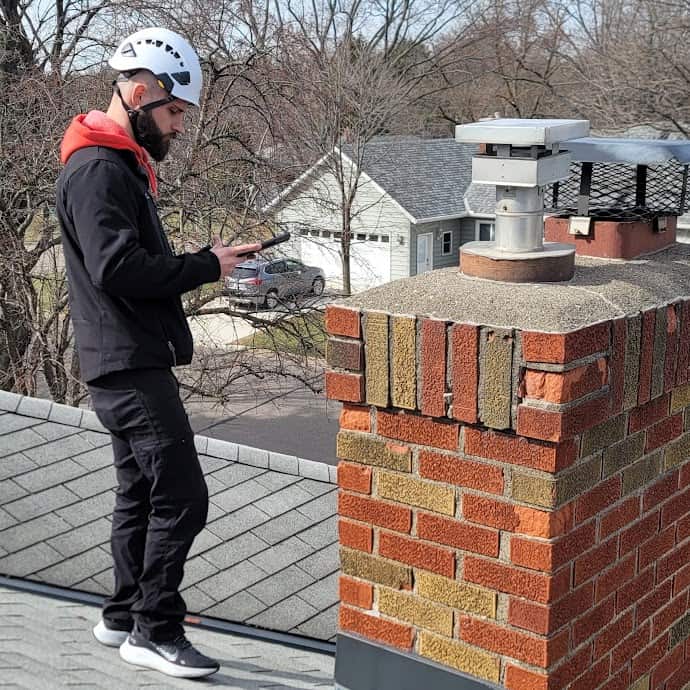
A real inspection isn’t a ten-minute walk-around. It’s a systematic look at mortar joints, flue liner condition, flashing integrity, the chimney crown, the cap, and the structural stability of the masonry itself. When we inspect a chimney in Ramsey County, we photograph any damage we find and give you a written breakdown of what needs immediate attention versus what’s worth monitoring over time. No guesswork, no vague recommendations.
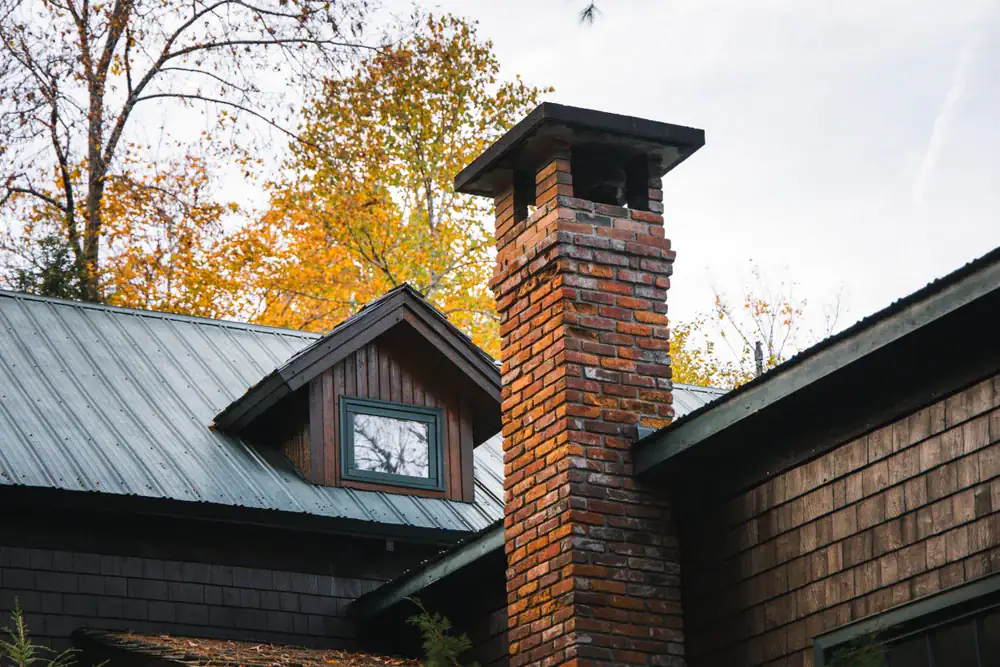
This matters more in Ramsey County than in a lot of other markets. St. Paul and the inner-ring suburbs have a significant amount of housing stock built between 1890 and 1940 — homes with original masonry chimneys that are now 80 to 130 years old. These systems weren’t built to last forever without maintenance, and Minnesota’s climate doesn’t make it easier. When temperatures swing from -20°F in January to 90°F in July, water that seeps into micro-cracks in mortar joints freezes, expands by roughly 9 percent, and widens those cracks year after year. That’s not a slow process — it compounds.
The point of a thorough inspection is to catch that damage at the repair stage, not the rebuild stage. A cracked crown caught early might run $200 to $700 to fix. Left alone for a few more winters, the same problem can work its way into the flue liner and the masonry below it, turning a straightforward repair into a much larger project. The inspection is where you find out which situation you’re actually in.
When Fireplace Repair Actually Makes More Sense Than Replacing
For most Ramsey County homeowners, targeted repair is the right answer — not because replacement is never warranted, but because the math almost always favors fixing the specific component that’s failing rather than tearing out and rebuilding a system that’s otherwise sound.
Take a chimney liner. A full liner replacement runs anywhere from $625 to $7,000 depending on the liner type and the length of the flue. That’s a significant range, and the right answer depends on what’s actually wrong. If a clay tile liner has a single hairline crack and the rest of the liner is intact, the repair conversation looks very different than if sections of the liner have separated or a chimney fire has compromised the structure. One scenario calls for monitoring or a targeted patch; the other calls for relining.
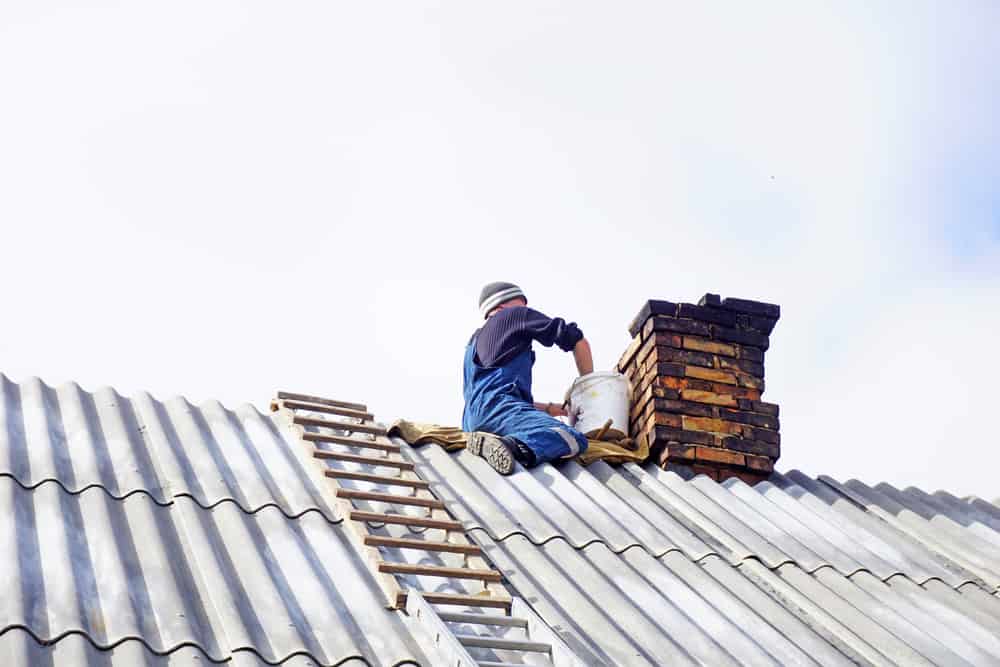
The same logic applies to masonry. Tuckpointing — the process of repairing deteriorated mortar joints — typically runs $500 to $2,500. It’s one of the most common repairs we do on older St. Paul homes, and it’s also one of the most cost-effective ways to extend the life of a chimney by decades. Replacing the entire chimney because the mortar joints are worn would be like replacing your car because the tires are bald.
Where replacement becomes the better financial decision is when damage is widespread, structural, and affects multiple systems at once — or when the cost of repairing an aging component repeatedly is going to exceed the cost of installing a new one. That’s a real scenario, and we’ll tell you honestly when we’re looking at it.
Chimney Cap Installation: Repair First or Replace Outright?
A chimney cap is one of the most overlooked components on the system — and one of the least expensive to fix when it fails. Its job is to keep water, animals, and debris out of the flue. When it’s missing or damaged, all three become problems quickly.
Cap repair or replacement typically runs $100 to $800 depending on the size, material, and whether a custom fit is needed. That’s a low-cost fix with a high-impact payoff. Water infiltration from an uncapped or damaged chimney is one of the leading causes of liner deterioration, crown cracking, and interior water damage — problems that cost significantly more to address once they’ve had time to develop.
How to Know If Your Chimney Cap Needs Replacing vs. Repairing
If the cap is structurally intact but has minor rust or a loose mounting, repair is usually the right call. If it’s cracked, missing entirely, or has mesh that’s been compromised by years of weather exposure, replacement makes more sense — especially given how affordable a new cap is relative to the damage a failing one can cause.
In Ramsey County, animal intrusion through damaged caps is a genuinely common problem. Raccoons and birds find uncapped chimneys in late winter and early spring, right when homeowners are starting to think about the last few weeks of heating season. By the time the nest is discovered, there’s often debris in the flue and a liner inspection that should have happened months earlier. A properly fitted stainless steel cap with a spark arrestor mesh prevents all of it.
One thing worth knowing: not all caps fit all chimneys. Older masonry chimneys — the kind common in St. Paul’s historic neighborhoods — often require custom-fitted caps rather than off-the-shelf sizes. Getting the fit right matters both for function and for longevity. A cap that doesn’t seat properly is almost as bad as no cap at all.
Chimney Liner Installation and Chimney Flashing Repair: What Ramsey County Homeowners Ask Most
Two of the most common repair questions we get from homeowners across Ramsey County involve the liner and the flashing — and they’re worth addressing together because both are frequently misunderstood.
On the liner: the question is almost always “do I actually need a new one?” The honest answer is that it depends on what the inspection finds. A well-constructed liner can last up to 25 years; a budget liner might start showing wear in five. Clay tile liners, which are standard in most homes built before 1970, are particularly vulnerable to freeze-thaw damage in Minnesota’s climate. When sections separate or cracks become structural, relining is the right move — not because it’s the expensive option, but because a compromised liner is a genuine safety issue. Chimney fires burn at temperatures above 2,000°F, and a cracked liner is what stands between that heat and the wood framing of your home.
Chimney flashing repair is a different conversation. Flashing is the metal seal at the point where the chimney meets the roofline, and it’s one of the most common sources of water infiltration in Ramsey County homes. Spring snowmelt is the usual culprit — homeowners notice a ceiling stain in March or April and trace it back to failed flashing that’s been slowly leaking through the winter. Caught early, flashing repair runs $300 to $800. Left alone, the water works into the masonry, the interior wall, and sometimes the structural framing below, turning a straightforward repair into a multi-trade project.
The reason flashing fails in Minnesota specifically comes back to the same freeze-thaw dynamic that affects everything else. Metal expands and contracts with temperature swings, and over years of Minnesota winters, the seal between the flashing and the masonry fatigues. The fix isn’t complicated, but it does require the right materials — breathable sealants that work with masonry rather than trapping moisture behind them. Using the wrong product on a Ramsey County chimney is a short-term fix that creates a longer-term problem.
Finding the Right Chimney Repair Company in Ramsey County, MN
The repair-versus-replacement question doesn’t have a universal answer, but it does have a reliable process: get a thorough inspection from someone who’ll tell you what they actually found, not just what generates the largest invoice. Most fireplace problems in Ramsey County are fixable at a fraction of what full replacement costs — if they’re caught and addressed before they compound.
We work exclusively on wood-burning fireplace systems, and our focus has always been repair first. That means every recommendation we make is specific to what your chimney actually needs, not what’s easiest to sell. We’re licensed, certified, and insured, and we handle permit applications on structural work so you don’t have to navigate that process yourself.
If you’re not sure what you’re dealing with, the best starting point is an honest inspection. We offer same-day estimates and a 100% satisfaction guarantee — so there’s very little risk in finding out exactly where things stand.