Summary:
You’ve got a fireplace. Maybe it’s been sitting there for years, collecting dust because hauling wood in a Minnesota winter just isn’t worth it anymore. Or maybe you’ve thought about converting it to gas but never got past the “I have no idea what this costs” stage.
That’s exactly where most Twin Cities homeowners get stuck. The price question feels like a wall. You don’t want to call a company just to get a number, and most websites aren’t giving you one.
This page will. We’ll cover what gas fireplace insert installation actually costs in the Twin Cities, what affects that number, how the process works, and what separates a quality installation from one you’ll regret.
What Does Gas Fireplace Insert Installation Cost in the Twin Cities?
Let’s start with the number you came here for. In the Twin Cities metro — covering Hennepin, Ramsey, Dakota, Scott, and Washington Counties — a fully installed gas fireplace insert typically runs between $5,000 and $8,000. That includes the unit itself, the liner, and labor.
The insert unit alone generally falls in the $4,000 to $6,000 range depending on the brand, BTU output, and features you choose. National cost guides put the average around $3,700, but that figure often excludes liner work, gas line connections, and permit fees that are standard in Minnesota. The $5,000–$8,000 range is a more realistic target for a complete, code-compliant installation in this market.
What Makes the Price Go Up — or Down?
A few variables move the needle more than anything else. The first is the insert unit itself. There’s a wide spectrum of models — from straightforward, functional units to high-efficiency inserts with realistic flame presentations, thermostatic controls, and remote operation. What you choose matters a lot to the final number.
The second factor is your existing chimney. In most cases, a gas insert installation doesn’t require major chimney modifications — the insert fits into your existing firebox, and a flexible liner runs through the existing flue to vent combustion gases safely. That “no major modifications” scenario is common, and it’s one reason inserts tend to cost less than building a new fireplace from scratch, which can run $2,500 to $10,000 or more.
Where costs can climb is when the existing chimney needs attention before installation. If your flue is damaged, undersized, or the liner is deteriorated, that work needs to happen first. This is exactly why a thorough pre-installation assessment matters — not just to give you an accurate quote, but to make sure the installation is safe and up to NFPA 211 standards, which require a Level 2 chimney inspection before any fuel-type change. Skipping that step isn’t just cutting corners; it’s a code violation.
The third factor is gas line access. If your home already has a gas line running near the fireplace, connection is relatively straightforward. If a new line needs to be run, that adds to the project scope. In Minnesota, connecting to a natural gas line requires a licensed gas fitter — something worth confirming with any company you’re considering.
Finally, permit fees vary by municipality. Whether you’re in Eagan, Woodbury, Shakopee, or Maplewood, local building departments have their own fee structures. Any reputable installer will pull the required permits — if a company tells you permits aren’t necessary, that’s a red flag.
Is a Gas Fireplace Insert Actually Worth the Investment?
That depends on what you’re comparing it to. If your wood-burning fireplace has become more of a decorative fixture than a heat source — which is the reality for a lot of Twin Cities homeowners — then the honest answer is yes, by a wide margin.
Here’s why. Open-combustion wood-burning fireplaces are notoriously inefficient. Much of the heat they generate goes straight up the chimney rather than into your living space. Gas fireplace inserts carry heat-efficiency ratings of 70% to 80% and higher. That’s not a small difference. You feel it immediately.
There’s also the convenience factor, which is hard to overstate once you’ve experienced it. No wood to haul, no ash to clean up, no waiting for the fire to catch. A gas insert gives you heat on demand — flip a switch, use a remote, or set a thermostat and walk away. For a family in Bloomington or Prior Lake trying to take the edge off a January evening, that matters.
Then there’s the Minnesota-specific angle that most fireplace content glosses over entirely. The Twin Cities metro is subject to wood-burning curtailment days issued by the Minnesota Pollution Control Agency during periods of elevated air pollution. On those days, wood-burning fireplaces and stoves are restricted. Gas inserts are not. If you’ve ever had a cold snap coincide with a no-burn day, you already understand the frustration. A gas insert removes that problem entirely.
And for homeowners who’ve experienced a polar vortex — the kind of event that sends temperatures to -20°F or colder with wind chill — the idea of a heating source that doesn’t depend on your furnace alone starts to feel less like a luxury and more like a practical decision. Many gas insert models can be operated with battery backup ignition, meaning they work even during a power outage.
How Gas Fireplace Insert Installation Actually Works
Most homeowners expect installation to be a bigger ordeal than it is. The reality is that a properly planned gas insert installation is a focused, relatively contained project — not a weeks-long renovation.
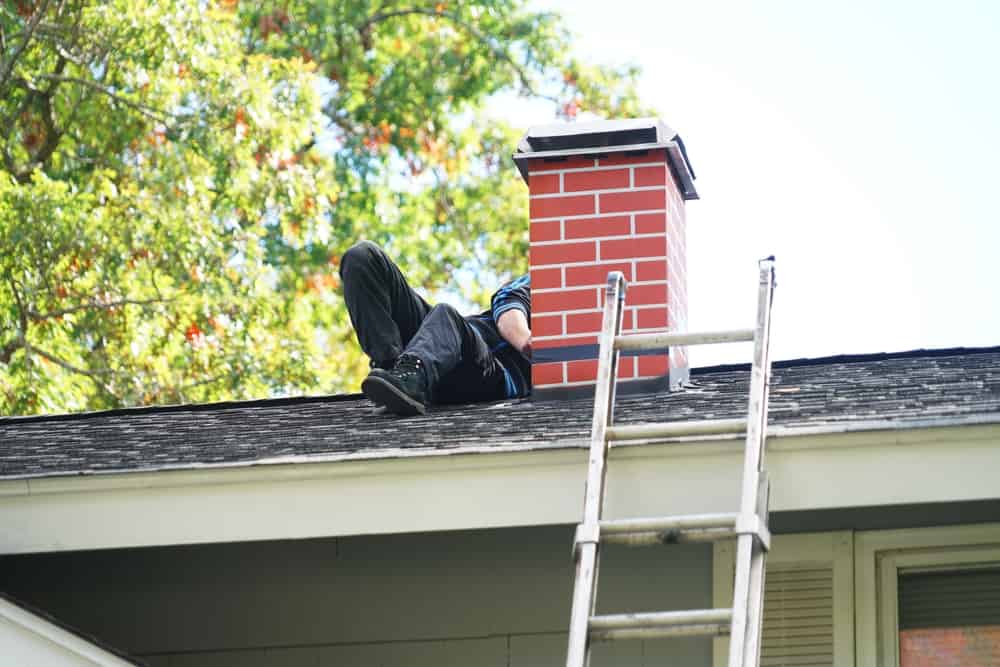
It starts with an assessment of your existing fireplace and chimney. Firebox dimensions, flue configuration, liner condition, and gas line proximity all need to be confirmed before anything is ordered or scheduled. This is also when the Level 2 chimney inspection happens, as required by NFPA 211 for any fuel-type change.
From there, the insert is sized and selected, permits are pulled, and installation is scheduled. The insert slides into the existing firebox opening, the liner is run through the flue, gas connections are made by a licensed gas fitter, and the unit is tested thoroughly before the job is considered done.
What Should We Look for in a Gas Fireplace Insert Installer?
This is where a lot of homeowners feel uncertain, and understandably so. Chimney and fireplace work isn’t something most people hire for regularly, so it’s hard to know what separates a qualified installer from someone who’s just willing to do the job.
Certifications are the clearest signal. The National Fireplace Institute, established in 2002, certifies installers specifically in gas hearth appliances — including gas fireplace inserts. Earning that certification requires passing a rigorous written exam covering safety, placement, venting requirements, and installation guidelines, plus annual continuing education to maintain it. The Chimney Safety Institute of America has been the leading authority on chimney industry training since 1983. These aren’t participation certificates — they represent a demonstrated standard of knowledge.
Beyond certifications, ask whether the company is licensed and insured, and specifically whether they work with a licensed gas fitter for the gas line connection. In Minnesota, that’s a legal requirement, not optional. If a company can’t confirm it, move on.
Process transparency is another useful signal. A company that explains what they’ll do, why they’ll do it, and what you should expect at each stage is almost always more trustworthy than one that gives you a price and shows up. The pre-installation assessment, the permit pull, the post-installation test — these aren’t extras. They’re what a proper job looks like.
And read the reviews carefully. Not just the star rating, but what people actually say. Reviewers who mention that the company communicated well, showed up on time, and left the job site clean are telling you something specific. That kind of feedback is harder to fake than a five-star rating.
Common Questions Twin Cities Homeowners Ask Before Installing a Gas Insert
One question that comes up constantly: can I put a gas insert in my existing masonry fireplace? In most cases, yes. The vast majority of masonry fireplaces in the Twin Cities — including the original fireplaces found in older Saint Paul and Minneapolis homes, many of which date to the early-to-mid 20th century — can accommodate a gas insert. The pre-installation assessment confirms compatibility, and it’s rarely a deal-breaker.
Another common concern: is this going to be a big construction project? For most homeowners in Ramsey County, Hennepl County, or Dakota County, the answer is no. The insert fits into the existing firebox opening. A liner runs through the existing flue. There’s no tearing out masonry, no major structural work. The disruption is far less than people expect.
People also ask about safety — specifically carbon monoxide risk. This is a legitimate concern and worth taking seriously. A properly installed, direct-vent gas insert draws combustion air from outside and exhausts gases through a sealed flue system, keeping combustion byproducts entirely separate from your living space. The risk comes from improper installation — which is exactly why NFPA compliance, licensed gas fitters, and post-installation testing matter. A final safety check after every job isn’t a formality. It’s confirmation that everything is working the way it should before anyone signs off.
Finally, homeowners in Scott County and Washington County — areas with a mix of newer construction and established neighborhoods — sometimes ask whether their home already has a gas rough-in near the fireplace. Many newer homes in communities like Shakopee, Woodbury, and Prior Lake were built with gas lines already run to the fireplace location, which can simplify installation considerably. It’s worth checking before you assume a new line will be needed.
Ready to Stop Guessing and Get a Real Answer for Your Twin Cities Home?
If you’ve been sitting on this decision, the cost question is usually what’s holding things up. Now you have a real range — $5,000 to $8,000 for a fully installed gas insert in the Twin Cities — along with a clear picture of what drives the variation and what the process actually looks like.
The next step is a proper assessment of your existing fireplace and chimney. That’s where the real numbers come from, and it’s also where you find out if any prep work is needed before installation can happen.
We’re based in Eagan and serve homeowners across Hennepl, Ramsey, Dakota, Scott, and Washington Counties. If you want honest answers and someone who will actually show up, do the work right, and communicate with you every step of the way, give us a call at 651-399-2759.