
Know what's failing, and what can wait
Half the homes in Minneapolis were built by 1951, and so were their chimneys. We track down leaks, cracked crowns and failing liners, then walk you through your options before any work starts.
Leaks · Crowns · Liners · Rebuilds · Removal
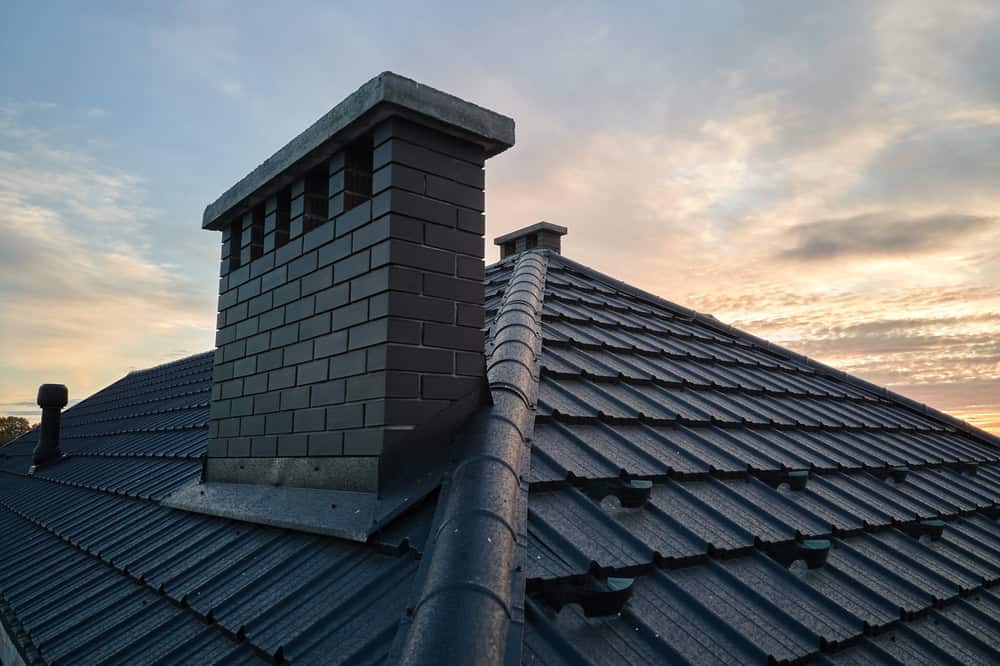
Most chimney damage comes back to water. It slips in through a cracked crown, tired flashing or eroded mortar, freezes, and pries the masonry apart. The Twin Cities average 24 days at or below zero each winter (Minnesota DNR), with thaws in between, so that cycle runs all season. Good chimney repair finds where the water gets in before it patches what the water damaged.
In our customers' words
“First Minneapolis winter in our new home and found a leak near one of the chimneys. Patrick at Suburban offered a detailed report with photos while estimating repair costs and sharing all possible options for fixing the issue.”
CJ, Google review, May 2023
“I contacted this company for a chimney sweep in Minneapolis and was informed by the inspector my fireplace was severely damaged which explained the smoke backing up when I used it. I had this company install a new chimney liner and I couldn’t be happier with the outcome.”
Evelin, Google review, November 2022
From a slow leak to a full rebuild
For mortar work on its own, see chimney tuckpointing in Minneapolis; for brick and stone, masonry chimney repair in Minneapolis. Looking for a chimney sweep in Minneapolis?
A water stain near the fireplace after a thaw or a hard rain is usually the first sign. Most chimney leaks come from one of four places: the flashing where the chimney meets the roof, a cracked crown, a missing cap (which also keeps animals out), or porous brick and mortar, which chimney waterproofing helps protect. The right fix depends on which one, which is why chimney leak repairs start with finding the source. If the cap is the weak point, start with choosing a chimney rain cap for Minneapolis winters.
A crown cracked by years of freezing lets water straight into the top courses of brick. Sealing works while the concrete is still solid; once it crumbles, the crown comes off and a new one is poured with a 2-inch overhang. Not sure whether you need chimney cap or crown repair? The two fail differently. Full details on chimney crown replacement.
Older chimneys were built with clay flue tiles, and cracked tiles can let smoke and combustion gases escape where they should not. A stainless steel liner is the standard fix, and it is the repair one Minneapolis customer above chose after a sweep visit found the damage behind a smoke problem. See chimney liner replacement.
When spalling and loose brick run too deep for repair, the stack comes down to sound masonry, usually at the roofline, and goes back up with matched brick, a new crown and new flashing. Chimney rebuilding costs more up front, but it resets the clock on the whole top of the chimney.
A chimney that no longer vents anything is just one more place for water to get in. Taking it down, often right before a reroof, closes that path for good. See chimney removal.
What the city checks, and when
42.8% of Minneapolis homes were built in 1939 or earlier (U.S. Census Bureau, American Community Survey 2020 to 2024), so plenty of chimneys here are nearing a century of Minnesota winters.
Minneapolis requires permits for most construction projects, and chimney work is not on the city’s list of exemptions. Its express permit program, open to pre-approved licensed contractors working on one- and two-family homes, names tuckpointing. Other chimney work follows the city’s regular permit rules.
Minneapolis has 20 historic districts, including Lowry Hill East and Washburn-Fair Oaks. Altering a designated property takes city approval before the building permit, and changing historic exterior materials goes through an administrative preservation application reviewed against the district’s guidelines. Some smaller projects only need permit review, so check with preservation staff before work is scheduled.
Minneapolis requires a Truth in Sale of Housing evaluation before a home is shown for sale, and the chimney is on the checklist. Most masonry problems, like missing brick or mortar, are noted for the buyer rather than required. Two chimney items are required repairs: deteriorated transite (asbestos-cement) vent pipe, and a heating vent that is not sealed where it enters the chimney. If those are not fixed before closing, the buyer signs on to finish them within 90 days. Fireplaces and wood stoves are not evaluated at all, so a clean TISH report says nothing about whether the fireplace is safe to use. A chimney inspection in Minneapolis fills that gap.

Roughly $300 to $1,800 to fix flashing, $500 to $2,500 for tuckpointing and $1,000 to $3,000 for a new crown, based on national 2026 figures from HomeGuide and Angi. A stainless steel liner runs $900 to $3,800 installed, and a rebuild from the roofline up $1,000 to $3,500. Several repairs at once is why some quotes land near $8,000; what $3,000 vs $8,000 buys in chimney repair explains the difference.
It goes by the part being fixed. Tuckpointing, or repointing, replaces worn mortar joints. Crown repair fixes the concrete slab on top. Flashing repair reseals where the chimney meets the roof. Relining puts a stainless steel liner inside a cracked flue. A rebuild takes the damaged top of the chimney down and lays it back up. Masonry chimney repair is the umbrella term for the brick and mortar work.
Small things, yes: sealing a hairline crack in the crown or replacing a cap, if you can work safely at roof height. Repointing, crown replacement and rebuilds are roof-height masonry work, relining changes how the chimney vents, and most of it needs a permit in Minneapolis. The city’s TISH guidance says work on heating vent systems takes a licensed contractor.
From the ground, look for crumbling or missing mortar, brick faces flaking off, white staining on the brick, a cracked crown or a leaning stack. Inside, watch for water stains near the fireplace, a damp or musty smell, bits of tile or mortar in the firebox, or smoke backing up into the room. Any one of them is worth an inspection.
Most likely. Minneapolis requires permits for most construction, chimney work is not on its exemption list, and its express permit program for licensed contractors names tuckpointing. If the house is in one of the city’s historic districts, check with the city’s preservation staff first: changing historic exterior materials needs their approval before the permit.
Yes. Minneapolis enforces the Minnesota Residential Code, which adopts IRC section R1003.9: the top of a chimney must stand at least 3 feet above the highest point where it passes through the roof, and at least 2 feet above any portion of a building within 10 feet. After a reroof or an addition, a chimney that used to comply can end up too short.
Send the details, get a plan
Tell us what you are seeing and where. We work across Minneapolis and the rest of Hennepin County, including Golden Valley, St. Louis Park, Hopkins and Plymouth, from our office in Eagan. About Suburban Chimney Solutions.