
Summary:
A chimney without a cap takes in rain, snow and animals all winter. A cap made of the wrong metal rusts out in a few years, and one that is the wrong size can hurt the draft. Choosing well comes down to three decisions: material, coverage and fit.
This guide walks through each one for Minnesota conditions, with 2026 installed prices and the building code rule every rain cap has to meet.
Why chimney rain caps matter in Minnesota
Water is a chimney’s main enemy. Rain and snow that fall straight down an uncapped flue soak the liner, the smoke chamber and the damper, and water that sits on the crown works its way into the brick. When that water freezes, it expands by about 9%, which is how small cracks become spalling brick and failing mortar over a few winters.
A rain cap stops most of that at the top. It also keeps out birds and squirrels, whose nests can block the flue and push smoke and gases back into the house, and its screen keeps sparks and embers from landing on the roof.
What going without a chimney cap costs you
Damage from a missing or broken cap starts small and grows. Water weakens mortar joints, rusts the damper, and can stain ceilings and walls near the chimney, and fixing that damage can run into the thousands. A new cap costs about $200 to $850 installed (HomeGuide, 2026).
If your cap is already dented, rusted or loose, here is how to repair or replace a damaged cap, and how to tell whether the crown underneath needs work too.
Minnesota weather challenges for chimney caps
Minnesota asks more of a chimney cap than most climates do. Plan for three things:
- Freeze-thaw cycles. Water that gets past the cap freezes in cracks and widens them. A cap with a hood wide enough to keep rain and snow off the flue opening does the most good.
- Wind and ice. Winter storms loosen poorly fastened caps and can tear them off. Secure mounting and rust-resistant fasteners keep a cap in place, and HomeGuide lists wind-resistant designs as a $70 to $400 option.
- Soot and screens. The mesh screen needs openings large enough to let smoke out freely. Very fine mesh clogs faster with soot and creosote and can restrict the draft.
Chimney cap materials that last in Minnesota
Material decides how long a cap lasts. HomeGuide’s 2026 figures:
| Material | Typical lifespan | Prefab cap, installed |
|---|---|---|
| Galvanized steel | About 5 to 8 years | $200 to $375 |
| Aluminum | About 1 to 5 years | $400 to $475 |
| Stainless steel | Often sold with a lifetime warranty | $475 to $600 |
| Copper | Most carry a lifetime warranty | $575 to $650 |
Custom-sized caps cost more: $650 to $800 for stainless steel and $750 to $850 for copper. Galvanized steel and aluminum save money up front but wear out within a few years, so a stainless cap usually costs less over the life of the chimney.
Stainless steel vs. copper chimney caps
Both hold up to Minnesota winters. Stainless steel is the practical choice: it resists rust, handles temperature swings, and costs less. Copper runs about $50 to $100 more for a prefabricated cap and weathers to a brown, then green, patina that suits brick homes and older architecture.
If you may sell in a few years, stainless steel is the sensible buy. If you want the look and plan to stay, copper is worth considering. Either way, skip the cheapest metal: a galvanized cap that rusts out and gets replaced ends up costing more than one stainless cap.
Single-flue vs. multi-flue chimney caps
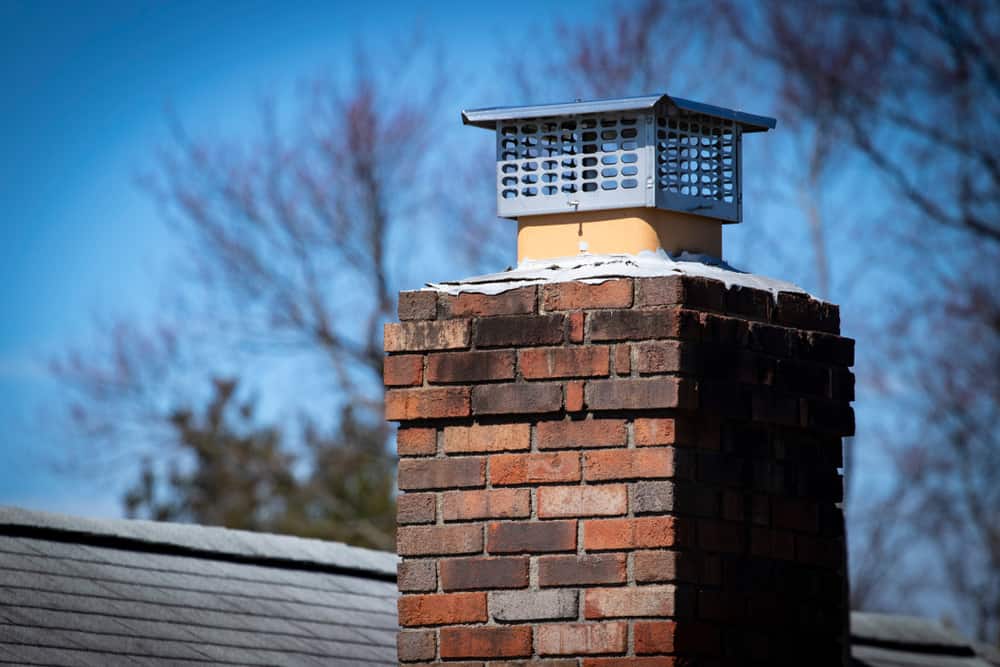
A single-flue cap fits onto one flue tile that sticks up above the crown. It is the most affordable choice and works well when the chimney has one flue and the crown is sound.
A multi-flue cap sits over the whole top of the chimney and covers every flue at once. It costs more, but it also shields the chimney crown from rain and snow, which matters in Minnesota, where freeze-thaw cycles crack concrete crowns. If your crown already shows cracks or you have more than one flue, a multi-flue cap is usually worth the extra cost.
Whichever you choose, size matters. Minnesota’s residential code adopts the 2018 International Residential Code, and section R1003.9.3 says a rain cap on a masonry chimney must leave an open area under the cap of at least four times the open area of the flue it covers, so the cap does not choke the draft.
Choosing the right chimney rain cap for your Twin Cities home
For most homes, the right answer is a stainless steel cap sized with enough open area: single-flue if there is one flue and the crown is sound, multi-flue if not, and copper if appearance matters to you. Whatever you pick, have it fastened well enough to ride out winter wind.
Common questions about chimney rain caps
Are rain caps required on chimneys?
Not by the residential code Minnesota uses. The code requires that a rain cap, if you install one on a masonry chimney, leaves at least four times the flue’s open area under it. Separately, it requires every masonry chimney to have a sloped concrete, metal or stone cap with a drip edge, which in everyday terms is the crown, not the metal rain cap.
What is the difference between a chimney cap and a rain cap?
Usually nothing: most people use both names for the metal hood over the flue. The mix-up comes from the crown, the concrete slab on top of the chimney, which the building code also calls a cap.
How much does it cost to put a rain cap on a chimney?
About $200 to $850 installed, depending on material, size and whether the cap is prefabricated or custom (HomeGuide, 2026). See what chimney repairs cost for how a cap compares with crown, liner and masonry work.
What is the best chimney cap for protecting a chimney from rain?
A stainless steel or copper cap with a hood wide enough to keep rain off the flue opening, fastened securely. Choose a multi-flue cap if you also want to keep rain off the crown.
Suburban Chimney Solutions is a family-owned, licensed and insured chimney company in Eagan, rated 5.0 stars on Google, and we can help you choose and install the right cap. For work in the city, see our page on Minneapolis chimney repair, or call 651-399-2759. New customers get $25 off.